

The Sahara Desert represents Morocco’s most dramatic and transformative landscape, drawing travelers from across the world seeking encounters with vast golden dunes, ancient caravan routes, and Berber traditions preserved across centuries. Morocco desert tours provide structured access to this extraordinary environment, combining diverse landscapes from mountain passes to gorges and palm oases before reaching the iconic erg dunes that define the Saharan experience. Understanding the different tour options, destinations, and practical considerations helps you select the perfect desert adventure in North Africa’s most captivating country.
Why Morocco Desert Tours Captivate Travelers
Morocco occupies a unique geographical position where Mediterranean, Atlantic, mountain, and desert environments coexist within relatively short distances. Desert tours capitalize on this diversity, crossing dramatically different landscapes within single journeys that would require weeks of travel in other regions.
The cultural dimension enriches Morocco desert tours beyond simple scenery appreciation. Berber communities have inhabited these landscapes for millennia, developing sophisticated cultures adapted to desert conditions. Their hospitality, music, traditional foods, and deep connection to the land create human experiences that complement natural wonders. Touring with local guides provides access to authentic interactions increasingly rare in heavily commercialized tourist destinations.
The Sahara’s otherworldly character affects travelers profoundly. Silence deeper than most people have ever experienced, night skies containing billions of visible stars without light pollution, and landscapes seemingly unchanged from ancient times create perspectives difficult to find anywhere else on Earth. These experiences linger in memory long after returning to ordinary life.
Major Desert Destinations in Morocco
Merzouga and Erg Chebbi
Merzouga represents Morocco’s most famous desert destination, situated at the base of the spectacular Erg Chebbi dune field. These golden dunes rise dramatically to 150 meters, stretching approximately 28 kilometers along the Algerian border and providing the classic Saharan scenery most travelers picture when imagining Morocco’s desert.
From Merzouga, camel treks carry visitors into the dunes for sunset experiences and overnight camps where traditional music echoes across the sand. The surrounding area offers additional attractions including Khamlia village with its distinctive Gnawa music, the seasonal Dayet Srji salt lake attracting flamingos and migratory birds, and nomadic Berber families maintaining traditional lifestyles.
Merzouga suits travelers seeking the most dramatic dune scenery and highest accommodation diversity, ranging from basic budget options to upscale luxury desert lodges.
Zagora and M’Hamid
Zagora serves as a gateway to Morocco’s older-established desert tourism area, historically significant as a departure point for ancient trans-Saharan trade caravans. The famous sign declaring “Timbuktu 52 Days” by camel remains a memorable landmark reflecting the town’s historic caravan significance.
Beyond Zagora, the road continues south to M’Hamid, a small oasis town near the Algerian border considered by many locals as Morocco’s true gateway to the Sahara. The Erg Chigaga dunes beyond M’Hamid require 4×4 transport to reach but reward with massive remote dune fields containing almost no permanent tourism infrastructure.
Zagora suits travelers with limited time as it requires less driving from Marrakech than Merzouga, making it ideal for two-day desert tours providing genuine Saharan experiences without exhausting three or four-day circuits.
Erg Chigaga
Morocco’s most remote significant dune field lies approximately 50 kilometers beyond M’Hamid, accessible only by 4×4 vehicles or multi-day camel treks. Erg Chigaga’s 40-kilometer expanse receives dramatically fewer tourists than Erg Chebbi, providing genuine wilderness experiences for those willing to invest extra time and cost.
Luxury desert camps here cater to discerning travelers seeking ultimate privacy and exclusivity. The journey through remote landscapes and the camp’s isolation create experiences unlike anywhere else in Morocco, though reaching here requires specialized tours rather than standard desert circuits.
Popular Morocco Desert Tour Routes
Three-Day Marrakech to Merzouga Classic Circuit
The most popular Morocco desert tour route spans three days and two nights from Marrakech through the country’s most scenic southern landscapes.
Day one departs Marrakech early morning, crossing the High Atlas Mountains via the spectacular Tizi n’Tichka pass at 2,260 meters. The fortified village of Ait Benhaddou provides the first major stop, its UNESCO-listed earthen architecture rising dramatically from surrounding desert landscape.
Continuing through Ouarzazate and the Valley of Roses, the route traverses the Road of a Thousand Kasbahs before reaching Dades Valley accommodation by evening. The bizarre monkey-finger rock formations around Dades Gorge create remarkable scenery.
Day two passes through Todra Gorge, where 300-meter limestone cliffs create dramatic narrow canyons, then continues through increasingly arid landscape toward Merzouga. Late afternoon arrival allows time for camel treks into Erg Chebbi dunes for sunset and overnight in desert camps. Traditional music and star gazing complete the evening.
Day three returns to Marrakech via alternative routing, typically passing through the Draa Valley’s palm groves and ancient kasbahs before the long afternoon drive back.
Two-Day Marrakech to Zagora Tour
This shorter circuit suits travelers with limited time wanting genuine desert experiences without three-day commitments. The more accessible route still crosses the High Atlas Mountains, visits Ait Benhaddou, and provides camel rides and desert camp nights in authentic Saharan settings.
The Zagora route involves less total driving than Merzouga circuits while still delivering the fundamental Morocco desert experience. Dunes are smaller than Erg Chebbi but provide satisfying desert atmosphere and photography opportunities.
Four-Day Fes to Marrakech Desert Route
Travelers moving between Morocco’s two most important cities often choose four-day desert routes as alternative transport, combining sightseeing with necessary transfer. This one-way route allows coverage of major desert highlights without retracing steps.
Starting from Fes, the route heads south through Middle Atlas cedar forests to Midelt, continues to Erfoud and Merzouga for desert overnight, then returns north through gorges and kasbahs toward Marrakech. This popular itinerary creates logical one-way journeys for travelers already planning to visit both cities.
Extended Seven-Day Desert Expeditions
Comprehensive desert expeditions spanning seven days incorporate multiple desert regions, additional cultural sites, and greater time for immersive experiences. These tours might include Fes departures, Merzouga dune experiences, Erg Chigaga remote camps accessible by 4×4, Draa Valley exploration, Ait Benhaddou overnight stays, and Marrakech arrivals.
Extended tours allow relaxed pacing rather than exhausting driving days while incorporating destinations missed on standard three to four-day circuits.
Tour Types and Accommodation Options
Budget Group Desert Tours
Budget group tours combine individual travelers into parties sharing transportation and accommodation costs. Standard circuits cost $120 to $200 per person for three-day Merzouga tours and $80 to $130 for two-day Zagora options.
These tours use mid-range accommodations along the route and basic to mid-range desert camps. Groups typically include eight to fourteen participants traveling in comfortable minibuses or 4×4 vehicles.
The primary trade-off involves schedule flexibility and accommodation quality. Fixed itineraries serve average group preferences, while accommodation prioritizes functionality over luxury.
Mid-Range Private Desert Tours
Private tours provide exclusive vehicles and guides for your party, offering complete scheduling flexibility and personalized experiences at moderately higher costs than group options.
Three-day private Merzouga tours cost approximately $400 to $700 per person for couples, decreasing per person with larger groups. Four people sharing private tours often pay similar or less than premium group tours while gaining complete flexibility.
Luxury Desert Experiences
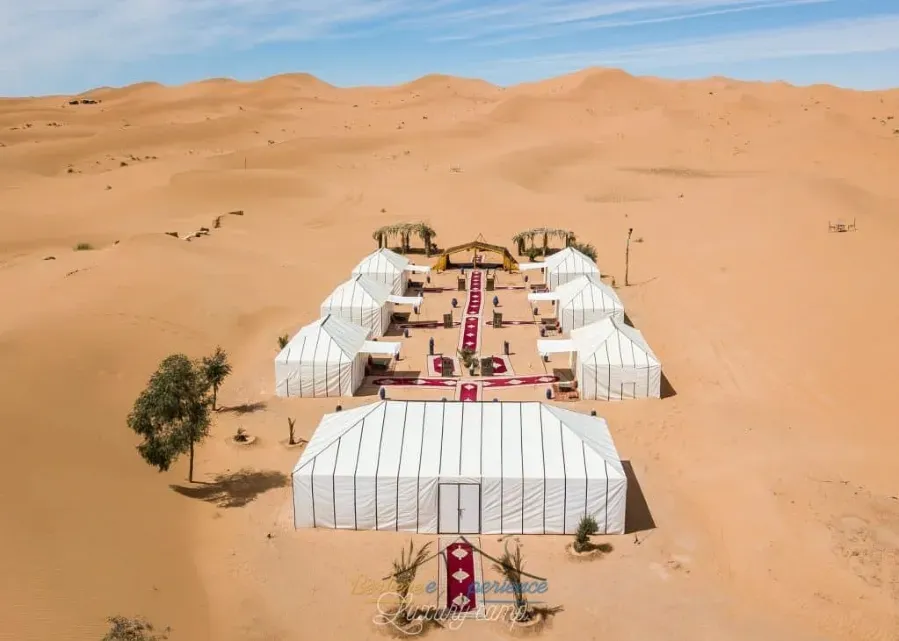
Premium luxury desert tours use high-end accommodation throughout routes combined with exclusive desert camps featuring private tents, proper furniture, restaurant-quality meals, and sometimes private bathroom facilities within tent structures.
Properties like Kasbah Tamadot, Bab el Sahara, or Scarabeo Camp provide exceptional desert luxury experiences at $300 to $800 per person nightly. These tours suit travelers celebrating honeymoons, anniversaries, or milestone events wanting extraordinary experiences without camping discomfort.
Practical Planning Considerations
Best Time for Morocco Desert Tours
Spring (March to May) and autumn (September to November) deliver optimal desert touring conditions with comfortable daytime temperatures and cool evenings. Wildflowers appear along mountain routes during spring, adding beauty to desert approaches.
Summer brings extreme heat with desert temperatures exceeding 45°C during peak afternoon hours. While tours continue operating, midday conditions prove brutal for outdoor activities. Those visiting summer should choose accommodation with air conditioning and schedule outdoor activities strictly during early morning and evening.
Winter desert nights drop below freezing, sometimes dramatically so, while daytime temperatures remain pleasant around 15 to 20°C. This season sees fewer tourists, lower prices, and clear skies perfect for stargazing, though cold nights require proper preparation.
What to Pack for Desert Tours
Layer clothing addressing dramatic temperature swings from cool mountain crossings to hot desert afternoons and cold nights. Bring lightweight breathable clothing for daytime heat, warm mid-layers for morning and evening temperatures, and proper jackets for mountain passes and cold desert nights.
Sun protection proves critical at desert altitudes where UV radiation intensifies without atmospheric filtration. High-SPF sunscreen, quality sunglasses, and wide-brimmed hats prevent painful sunburn. Scarves serve multiple purposes including dust protection during windy conditions.
Comfortable footwear suits both extended walking in ancient kasbahs and optional dune climbing. Sandals or flip-flops provide relief in desert camp relaxation while proper shoes handle uneven medina terrain.
Health and Safety Considerations
Stay well hydrated throughout desert tours as dry conditions accelerate dehydration more rapidly than travelers accustomed to humid climates expect. Drink bottled water consistently and avoid relying on thirst as your hydration indicator in desert environments.
Basic first aid supplies including blister treatment, pain relievers, antidiarrheal medication, and any personal prescriptions prove valuable given remote locations during portions of desert tours.
Selecting Reliable Desert Tour Operators
Research operators thoroughly using recent traveler reviews on TripAdvisor, Google Reviews, and specialized Morocco desert tours forums. Look for consistent positive feedback regarding guide quality, vehicle maintenance, accommodation standards, and honest representation of experiences.
Request detailed itineraries specifying accommodation names, included meals, transportation details, and any additional expected costs. Vague descriptions of “standard accommodation” or “comfortable desert camp” should prompt requests for specific property names and photos.
Verify business registration and confirm legitimate operators hold appropriate licensing from Moroccan tourism authorities. Transparent operators provide this information readily while evasive responses signal potential issues.
Be appropriately skeptical of prices significantly below market rates, which almost invariably indicate compromises in vehicle maintenance, guide experience, accommodation quality, or hidden additional charges that emerge during tours.
Conclusion: Frequently Asked Questions
Which is better, Merzouga or Zagora for Morocco desert tours?
Both offer genuine Saharan experiences with distinct characteristics. Merzouga’s Erg Chebbi dunes are more dramatic and photogenic with heights reaching 150 meters, while Zagora is more accessible from Marrakech requiring less driving for two-day tours. First-time visitors with adequate time should prioritize Merzouga for its superior dune scenery. Those with limited time or budget constraints find Zagora provides satisfying desert experiences with less investment.
How physically demanding are Morocco desert tours?
Most standard desert tours require minimal physical fitness. Long drives between destinations involve primarily sitting. Camel treks typically last 30 to 90 minutes at easy walking pace, though some find camel riding uncomfortable without prior experience. Optional dune climbing proves strenuous but isn’t required. Those with mobility limitations should confirm accessible vehicle options with operators.
Is it safe to sleep in desert camps?
Desert camps throughout Morocco’s main tourist routes maintain good safety records with established operators. Reputable camps employ security, maintain proper facilities, and have emergency communication systems. Solo travelers and couples should book through established operators with verified reviews rather than accepting last-minute recommendations from strangers. Trust your instincts about accommodation quality when visiting camps and raise concerns with operators before committing.
Can I visit Morocco’s desert independently without organized tours?
Independent desert travel is possible but complicated. Reaching Merzouga requires either driving (challenging in remote areas) or multiple bus connections consuming significant time. Desert camp bookings, camel arrangement, and navigation require local knowledge and language abilities most tourists lack. Organized tours provide better value and experiences for most travelers, though budget-conscious adventurers with time flexibility can arrange elements independently using local contacts found in Merzouga or Zagora upon arrival.
Do Morocco desert tours operate year-round?
Yes, desert tours operate throughout the year though seasonal conditions vary significantly. Spring and autumn provide optimal experiences. Summer extreme heat makes outdoor activities uncomfortable during midday hours but tours continue with appropriate schedule adjustments. Winter brings cold nights requiring warm clothing but provides clear skies and fewer tourists. Each season offers distinct experiences, with your timing preference depending on weather tolerance and crowd sensitivity.
